
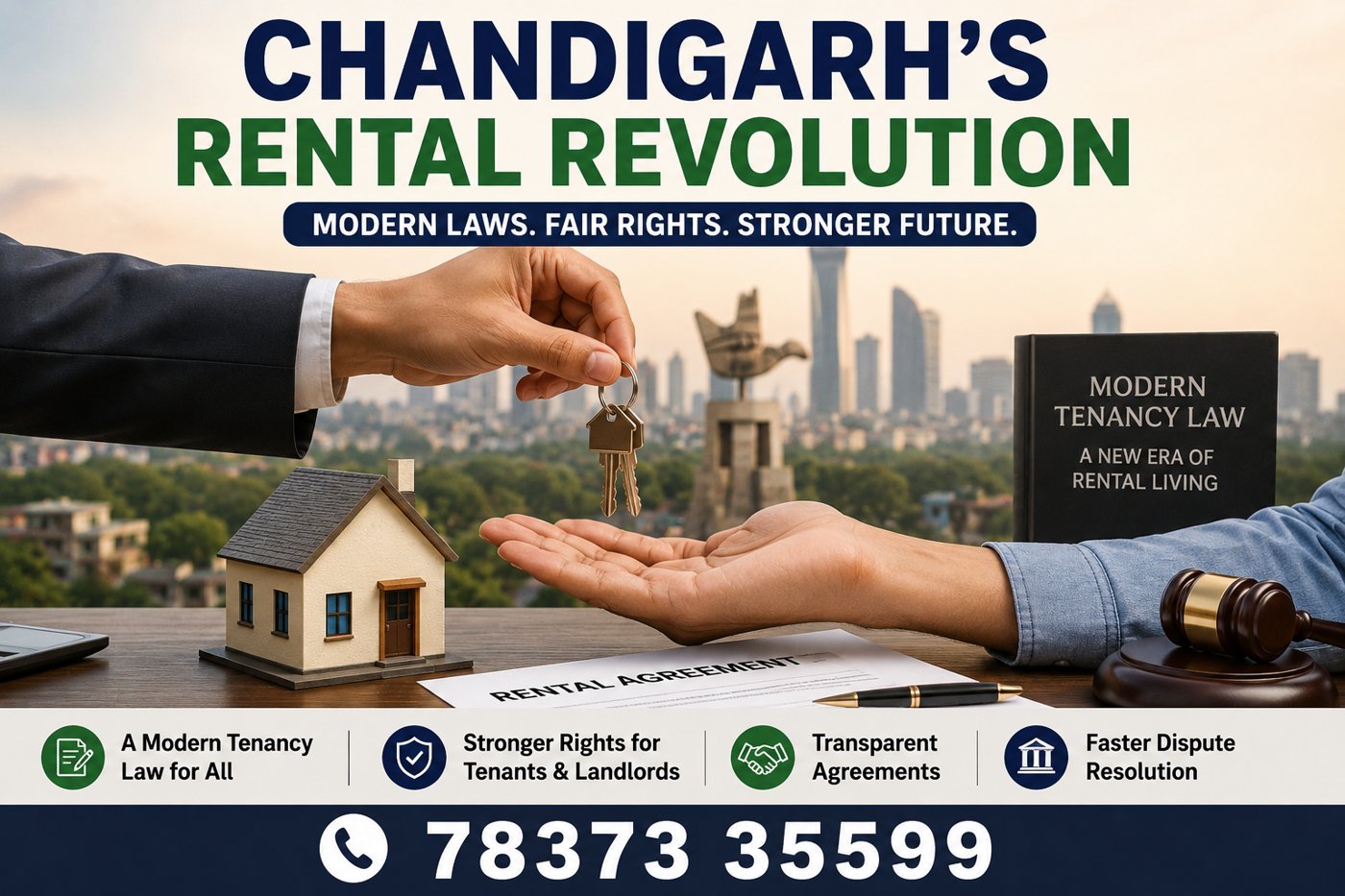
Chandigarh’s Rental Market Set for Major Reform: UT Plans Modern Tenancy Law
Chandigarh’s dynamic rental market is on the cusp of a significant transformation. The Union Territory (UT) administration is actively working towards implementing a modern tenancy law, aligning with the central government's Model Tenancy Act (MTA), 2021. This move is poised to bring much-needed structure, transparency and fairness to the landlord-tenant relationship, fundamentally reshaping how properties are rented across the city and the broader Tricity region.
For investors and tenants alike, understanding these impending changes is crucial. According to insights shared by homziio.com, this legislative shift is not merely procedural but represents a paradigm change, promising to formalize agreements, reduce disputes and foster a more professional rental ecosystem in Chandigarh’s rental market.
Why Modernize Tenancy Laws in Chandigarh?
The existing rental framework in many parts of India, including Chandigarh, often relies on outdated laws that were ill-equipped to handle the complexities of a rapidly growing urban rental market. This led to ambiguities, prolonged disputes and a lack of clear guidelines for both property owners and renters.
Addressing Existing Challenges
The primary driver for this reform is to overcome the prevalent challenges that have plagued the rental sector:
- Informal Agreements: Many rental arrangements were based on verbal agreements or poorly drafted contracts, leading to disputes over rent, maintenance and eviction.
- Security Deposit Issues: Unregulated security deposit amounts and difficulties in their timely refund were common pain points for tenants.
- Protracted Disputes: Resolving landlord-tenant conflicts often involved lengthy court battles, lacking a specialized and efficient redressal mechanism.
- Unclear Rights and Responsibilities: Both parties often operated without a clear understanding of their legal obligations and rights.
The new law aims to provide a robust legal framework that addresses these issues head-on, ensuring a more equitable environment.
Key Provisions of the Proposed Modern Tenancy Law
While the exact Chandigarh-specific rules are being finalized, they are expected to largely mirror the Model Tenancy Act, 2021. Here are some of the cornerstone provisions:
Mandatory Written Agreements
A significant shift will be the mandate for all rental agreements to be in writing and registered with the Rent Authority. This ensures legal validity and transparency, leaving no room for verbal disputes.
Regulation of Security Deposits
The new law proposes a cap on security deposits. For residential properties, it will likely be limited to a maximum of two months' rent, and for commercial properties, up to six months' rent. This will prevent exorbitant demands and protect tenants' financial interests.
Dedicated Rent Authority and Courts
To expedite dispute resolution, the law envisions the establishment of a dedicated Rent Authority and Rent Courts. These specialized bodies will handle all landlord-tenant disputes, offering a faster and more efficient alternative to conventional civil courts.
Clear Eviction Procedures
The law will define specific grounds for eviction, providing clarity and preventing arbitrary removal of tenants. Similarly, tenants will be required to give prior notice before vacating the premises, ensuring landlords have time to find new occupants.
Subletting Restrictions
Subletting will generally require the landlord's prior written consent, providing more control to property owners over who occupies their premises.
Impact on Chandigarh’s Rental Market: Landlords and Tenants
The implementation of this modern tenancy law will have far-reaching implications for all stakeholders in Chandigarh’s rental market.
For Landlords
Property owners can expect a more structured and legally secure environment. While the cap on security deposits might initially seem restrictive, the streamlined dispute resolution mechanism and clearer eviction process offer significant advantages. It formalizes their assets and provides a transparent framework for rental income. Local advisors at homziio.com suggest that this clarity could attract more institutional investors to the rental housing sector.
For Tenants
Tenants will benefit from enhanced protection, fair practices and a clear understanding of their rights. The reduced security deposit burden and a robust dispute redressal system will significantly improve their rental experience. This also encourages greater accountability from landlords regarding property maintenance.
Economic and Investment Outlook for Tricity
The reform is expected to professionalize the rental housing sector, potentially boosting investor confidence. A well-regulated market reduces risks, making property investment in Chandigarh, Mohali and Panchkula more attractive. For instance, in Q4 2023, Chandigarh saw a steady residential rental yield of approximately 2.5-3.0%, which could see a marginal uptick as market transparency improves. Increased formalization might also lead to better data collection, enabling more informed investment decisions.
Comparison: Old vs. New Tenancy Law
| Feature | Old System (often informal/ambiguous) | Proposed Modern Tenancy Law |
|---|---|---|
| Agreement Type | Verbal/unregistered common | Mandatory written & registered |
| Security Deposit | No cap, often exorbitant | Capped (2 months residential, 6 months commercial) |
| Dispute Resolution | Lengthy civil court process | Specialized Rent Authority/Courts |
| Eviction Process | Often ambiguous, open to misuse | Clearly defined grounds & process |
Navigating the New Landscape: A Pro-Tips Checklist
- Stay Informed: Regularly check official Chandigarh administration notifications for the final rules.
- Review Existing Agreements: Understand how your current rental contracts might be affected.
- Formalize All Agreements: Insist on written and registered agreements, regardless of party.
- Understand Your Rights: Familiarize yourself with the specific rights and responsibilities outlined in the new law.
- Seek Expert Advice: For complex cases, consult legal or real estate professionals.
Mini Case Study: The Sharma Family Dispute
Consider the Sharma family, who rented a flat in Sector 44, Chandigarh. Under the old system, their landlord refused to return a three-month security deposit upon vacating, citing vague damages. The Sharmas faced a lengthy and expensive civil court battle. With the new law, a dedicated Rent Authority would provide a faster, more accessible platform for such disputes, likely leading to a quicker resolution and fairer outcome, given the security deposit cap and clear damage assessment guidelines.
Challenges and Implementation Hurdles
While the intent is positive, the implementation of any new law comes with its challenges. Awareness campaigns will be crucial to educate both landlords and tenants. The establishment and efficient functioning of the new Rent Authorities and Courts will also be key to the success of the reform. Ensuring uniform application across the Tricity region will require coordination between different administrative bodies.
Conclusion: A Brighter Future for Chandigarh's Rental Market
The planned modern tenancy law marks a significant step forward for Chandigarh’s rental market. By bringing greater clarity, fairness and efficiency, it promises to create a more harmonious and investment-friendly environment. Both landlords and tenants stand to gain from a system that is transparent, predictable and just. This reform is not just about new rules; it's about building trust and fostering sustainable growth in the region's real estate sector.
For those interested in commercial real estate investment in Tricity, understanding these regulatory shifts is paramount. For detailed consultation, local market insights, or investment guidance, contact the experts at homziio.com. We can help you navigate these changes and identify lucrative opportunities.